


Automotive Machined Parts
Core Advantages
Accurate tooling interfaces
Key machined dimensions are controlled to ±0.015 mm. At an insert pocket or locating interface, this limits dimensional variation between the replaceable tooling element and its supporting body.
Wear-resistant steel contact faces
Applicable hardened-steel components reach HRC 58–62 through the specified heat-treatment route. At repeatedly engaged guides and stops, the hardened working surface resists indentation and wear from recurring contact.
Smooth mold mating faces
Machined working surfaces reach Ra ≤0.8 μm. Where mold inserts or tooling blocks seat against one another, this reduces pronounced machining ridges that would otherwise interfere with face contact.

Custom Automotive Tooling Components
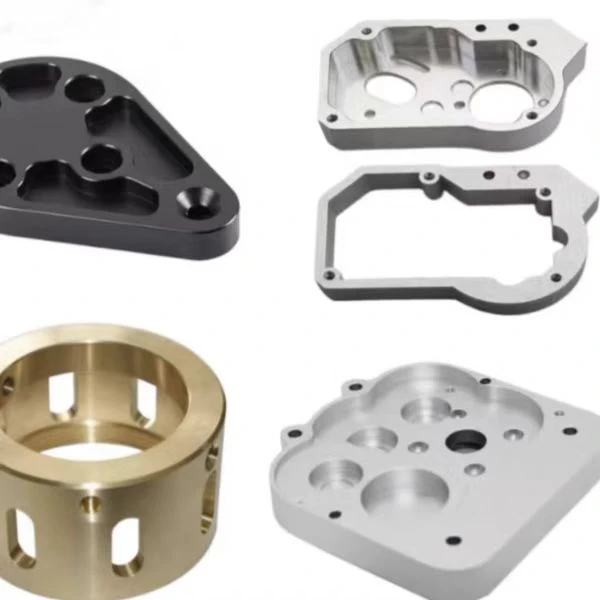
We manufacture from tooling drawings and component models, using machining centers for three-dimensional features and wire EDM for suitable conductive profiles. Steel components and engineering-plastic components follow separate machining routes, with heat treatment and finishing sequenced for the specified material.
Customizable Items
- Tooling-body outline
- Insert and cavity profiles
- Locating bores
- Fastener-hole patterns
- Guide grooves
- Parting-line features
- Clearance and ejection openings
- Part identification marks
Quality Control
- Raw-material checks cover grade, condition, and hardness. Heat-treated steel components are checked against the drawing's final material requirements before their machining results are accepted.
- First-piece inspection establishes the cavity profile and locating relationships from the tool datums. In-process checks revisit wear-sensitive features, with CMM measurement used for accessible positions and geometric relationships.
- Pre-packing inspection covers every finished component, including chipped edges, trapped debris, and visible finishing defects. Parts and inspection records are identified by drawing revision so that similar-looking tooling versions remain distinguishable.
FAQ
Q: How long does custom production take?
A: Custom production takes 10–15 days.
Q: Can you supply a sample before series production?
A: Yes. Samples are available before series production.
Q: What additional information identifies a replacement mold insert?
A: Provide the tool number, cavity position, and mating-component drawing.
Q: Can wire EDM produce a closed-bottom cavity?
A: No. A closed-bottom cavity requires another machining process.


